Immigration record / Personal manifesto
The Terminal Where Different Ideas Intersect and Cross-Pollinate
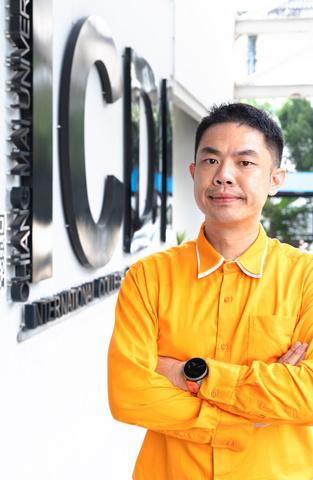
I am Wasut Pornpatcharapong (วสุท พรพัชรพงศ์), or “Khun” (ขุน), a computational scientist, educator, and interdisciplinary builder based in Chiang Mai, Thailand. Born and raised in the Isan city of Udon Thani, I received the Thailand Ministry of Science and Technology Scholarship to study Nanotechnology after completing Grade 12 at Triam Udom Suksa School in Bangkok. From there, my academic journey took me through Northwestern University and the University of California, San Diego, and eventually to the Department of Chemistry, Faculty of Science, Chiang Mai University—the destination originally prescribed by the scholarship that had begun the journey.
I now serve on the faculty of the International College of Digital Innovation at Chiang Mai University, where my professional work sits at the intersection of scientific computing, machine learning, data science, and digital innovation. I am also a certified Organizational Carbon Footprint Advisor with a National Verifier Certificate from the Thailand Greenhouse Gas Management Organization (TGO). My academic foundation, however, lies in theoretical and computational chemistry. I earned my PhD from the University of California, San Diego, where rigorous training in statistical mechanics, mathematics, physics, and molecular simulation shaped the way I approach scientific problems. Today, I remain driven by the same fundamental question that first drew me toward science:
What can we understand about the world if we are willing to ask difficult questions and build the tools necessary to answer them?
My professional trajectory has never followed a single disciplinary line. That began almost by accident at Northwestern sometime around 2008, when I walked into a room that turned out to hold a quantum chemistry course I had not signed up for. That accidental encounter redirected my path from wet-lab synthesis toward a world of code, numbers, equations, and abstract theory. Nearly two decades later, I became a computational scientist developing machine-learning methods for free-energy computation in complex chemical systems—neural-network surrogates, Gaussian process regression, Markov state models—and building the scientific frameworks that make those methods useful. I have worked across computational chemistry, scientific machine learning, stochastic modeling, sustainability and carbon accounting, education, and emerging forms of agentic artificial intelligence. Rather than treating these areas as disconnected interests, I see them as different instruments available for understanding complex systems. For me, disciplinary boundaries are useful maps, but they should never become walls around curiosity.
Yet professional identity captures only part of the person who arrived here. Long before I learned to describe myself as interdisciplinary, I learned to move through the world alone. A 2009 month-long journey across the World's Longest Rail Route—The Trans-Siberian Railway from St. Petersburg to Vladivostok in Russia became the first of several formative solo adventures across very different parts of the world, eventually including strange places such as Easter Island, The World's Most Dangerous Road, The Colonial Era Mine at Over 4,000 m in Altitude, The Steppes of Mongolia, The Secretive North Korea, The 5-day Trek in Patagonia, and The Summit of Mount Kilimanjaro. Travel taught me that no single institution, culture, profession, or worldview contains the entirety of what is possible. That lesson would later become unexpectedly important: whenever one map of life appeared to close, I already knew from experience that other worlds existed beyond its border.
Running became another transformation. What began as a health intervention grew into marathon training, long-distance running, mountain routes, and a new relationship with endurance. The Runner taught me something neither academia nor travel could teach in quite the same way: transformation is often built through ordinary repetitions performed long before there is visible evidence that anything has changed. The same principle now informs much of how I work—as a scientist, teacher, creator, and builder. Large changes frequently begin as quiet processes accumulating beneath the observable surface.
I therefore think of myself not as a collection of unrelated roles, but as several expressions of the same underlying creative impulse:
The Scientist seeks truth.
The Traveler expands the possible world.
The Runner supplies endurance.
The Artist creates meaning and form.
Terminal Wasut is the public terminal connecting those dimensions. It is both a professional home and an evolving record of the ideas, journeys, research, creative work, and transformations that continue to shape me. If there is one principle connecting everything here, it is simple: remain curious enough to cross borders, rigorous enough to let reality correct you, and free enough to keep creating what does not yet exist.